


Inkless Scar Camouflage vs. Cosmetic Tattooing: Which is Better?
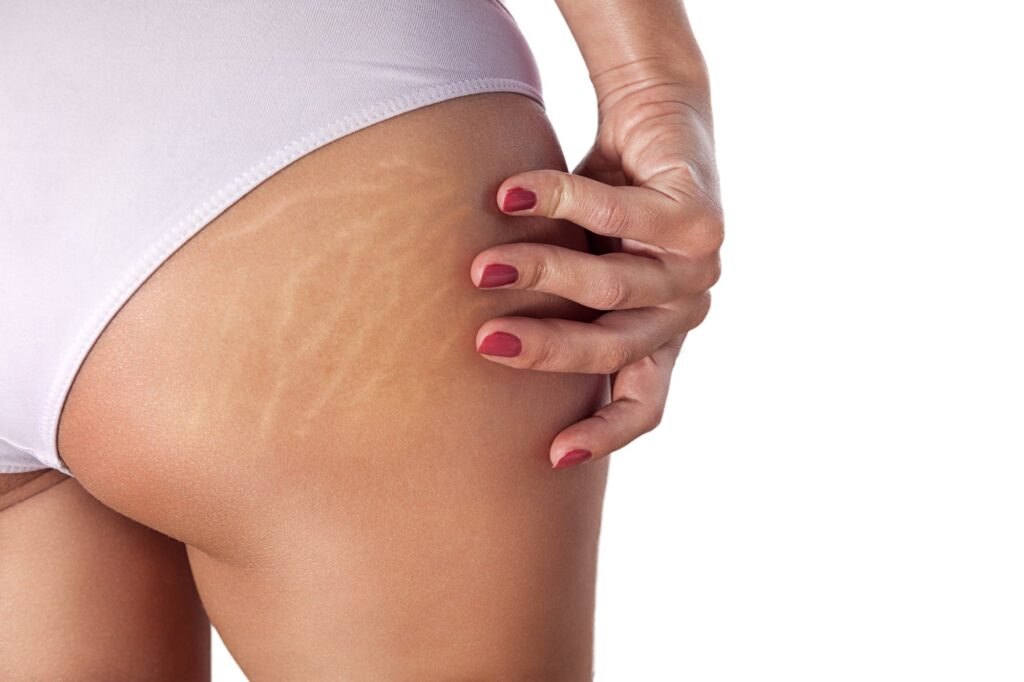
If you’ve been researching ways to improve the appearance of stretch marks, surgical scars, or accidental trauma scars, you have likely come across two very different approaches: inkless scar camouflage and camouflage cosmetic tattooing.
While they are frequently grouped together in the beauty industry, they work in fundamentally different ways. Understanding the core differences is key to choosing a treatment that supports your skin’s health for the long term.
What Is Camouflage Cosmetic Tattooing?
Camouflage cosmetic tattooing uses specialized flesh-toned pigments implanted into the dermis to visually blend a scar or stretch mark with the surrounding skin tone. It is commonly used for hypopigmented (white) scars, stable surgical marks, and areola restoration (paramedical tattooing).
However, this approach focuses strictly on color correction, completely ignoring the structural health of the tissue.
The Long-Term Risks of Tattooing Scars
The most important—and frequently overlooked—factor is that tattoo pigment and living human skin do not age or change in the same way. No matter how flawless a color match is on day one, a permanent color clash is almost inevitable over time because:
-
Pigment tones shift: Permanent makeup pigments break down and change hues as the years pass.
-
Skin tone fluctuates: Your natural skin constantly shifts due to sun exposure, tanning, hormonal changes, and the natural aging process.
-
The Contrast Effect: When your surrounding skin tans or pales, the tattooed scar remains exactly the same color, often making it look more prominent than it did originally.
Because of these permanent limitations, depositing artificial ink into damaged skin tissue is rarely the best long-term solution for body scars or stretch marks.
What Is Inkless Scar Camouflage?
Unlike traditional tattooing, inkless scar camouflage uses absolutely no pigment. Instead, it is an advanced, highly precise variation of skin needling.
By using targeted needling techniques combined with specialized cellular-remodeling serums, this treatment triggers the skin’s deep healing mechanisms to:
-
Activate a powerful boost of collagen and elastin production.
-
Remodel and flatten raised or rigid scar tissue.
-
Plump up depressed or indented skin.
-
Normalize blood flow and cellular communication in the area.
Rather than trying to mask or hide your skin under a layer of ink, inkless camouflage works from the inside out to repair and reconstruct the skin itself.
The Core Difference: Covering vs Correcting
Camouflage Tattoo:
- Adds pigment
- Improves visual blending
- Does not change skin structure
Inkless Camouflage (Skin Needling):
- Stimulates natural repair
- Improves texture and quality
- May help normalize skin tone over time
Can Inkless Treatment Actually Improve Colour?
Yes, and this is where the science gets exciting. Many people assume they need a tattoo to fix white or hyperpigmented marks, but skin needling is highly effective at restoring a more natural skin tone.
By breakdown down chaotic scar tissue and stimulating melanin-producing cells (melanocytes), inkless treatments encourage your body to naturally re-pigment the area. As the overall health and texture of the skin become uniform, the stark color contrast softens dramatically, yielding a flawless, natural result that changes beautifully alongside your skin throughout every season.
Why Treatment Before Tattoo Matters
If camouflage tattoo is being considered, preparing the skin first can make a significant difference.
Improving the skin beforehand may:
- Smooth uneven texture
- Reduce contrast
- Create a more stable foundation
- Improve how pigment ultimately appears
In many cases, addressing structure first leads to more natural and predictable outcomes—whether or not pigment is eventually used.
When Camouflage Tattoo May Be Appropriate
Camouflage tattoo can be a suitable option in specific situations, such as:
- Flat, stable scars
- Primarily colour-based concerns
- Areola tattooing
When the skin texture is already smooth and stable, pigment may help reduce visual contrast.
Limitations to Be Aware Of
Camouflage tattoo does not:
- Improve indentations or raised scars
- Correct texture irregularities
- Adapt to ongoing skin changes
- Initial colour retention
Because of this, results can vary depending on lighting, skin condition, and time.
A Structural-First Approach
When deciding how to treat changes in your skin, the priority should always be building a strong foundation.
| Feature | Camouflage Cosmetic Tattoo | Inkless Camouflage (Skin Needling) |
| Primary Method | Artificial pigment implantation | Natural collagen induction |
| Skin Structure | Leaves scar tissue completely unchanged | Rebuilds, smooths, and strengthens tissue |
| Texture Repair | Cannot fix raised, pitted, or wrinkled scars | Deeply remodels and refines skin texture |
| Long-Term Adaptability | Stays static; does not adapt to tanning or aging | Integrates naturally with your skin’s lifecycle |
For structural concerns like stretch marks, surgical incisions, or acne marks, addressing the tissue quality first is vital. To explore how targeted treatments can rebuild your skin’s foundation, read more about our skin needling for scar reduction protocols, or discover how we utilize microneedling for texture to treat complex acne scars and achieve total skin rejuvenation.
Because stretch marks are structural changes deep within the dermal layers, focusing on collagen synthesis via inkless needling will always deliver a far superior, more stable result than simply painting over the surface.
It’s a Case-by-Case Decision
There is no one-size-fits-all solution.
The right approach depends on:
- Whether the concern is colour, texture, or both
- How stable the skin condition is
- Long-term expectations
A thoughtful assessment helps determine the best path forward.
Advanced Scar Treatments in the Lower Mainland
At Vita Felice, we believe in working with your skin’s natural biology rather than covering it up. We specialize in advanced, non-invasive needling techniques designed to restore real skin health and confidence.
We welcome clients from all across the Lower Mainland and Metro Vancouver, providing customized corrective care for guests visiting us from:
-
Vancouver & Burnaby
-
Surrey & Richmond
-
Tri-Cities
-
New Westminster
Frequently Asked Questions
Is inkless camouflage better than a scar tattoo?
For the vast majority of body scars and stretch marks, yes. Inkless camouflage repairs the structural integrity of your skin and yields an authentic color blend that moves and tans with you, avoiding the long-term discoloration risks of tattoo pigments.
Can a cosmetic tattoo remove my scars?
No. Tattooing simply places a camouflage layer over the surface. It does not smooth texture, fill indents, or repair the damaged dermal layers.
Is inkless scar camouflage the same thing as traditional microneedling?
They share the same scientific foundation—collagen induction therapy—but inkless camouflage uses highly specialized, single-needle or tight-configuration medical techniques to precisely target individual scars and stretch marks, rather than treating a broad area uniformly.
Which is better for stretch marks?
Stretch marks are structural changes in the skin, so treatments that stimulate collagen—such as skin needling—are typically more effective than pigment-based approaches.
Final Thoughts: Cover the Concern, or Correct the Skin?
When choosing your path to smoother skin, ask yourself: Do you want to temporarily hide the damage, or do you want to restore the skin itself? By stepping away from pigment and choosing structural repair, you invest in a solution that looks beautifully natural for a lifetime.
If you are ready to explore your options, book a personalized consultation at our Metro Vancouver studio today. We will thoroughly analyze your scar type, skin texture, and aesthetic goals to map out a customized, pigment-free restoration plan.